Decoding Contractor Documents: Estimate, Bid, or Proposal?
Embarking on a major home renovation or repair project is an exciting, yet often daunting, endeavor. One of the first critical steps involves engaging with contractors and receiving documentation outlining their proposed work and costs. These documents often arrive labeled as an "estimate," a "bid," or a "proposal." While these terms are sometimes used interchangeably in casual conversation, understanding their distinct meanings and implications is crucial for homeowners.
This guide from Renovation Standard will equip you with the knowledge to accurately classify what a contractor has sent you, understand its contents, identify potential pitfalls, and use it effectively to make informed decisions. Our goal is to empower you to compare offers fairly, protect your interests, and ensure your project proceeds smoothly from planning to completion.
The "Why" Behind the Words
The specific terminology a contractor uses isn't just semantics; it reflects the level of detail, commitment, and legal weight associated with the document. Misinterpreting an estimate as a firm bid, or overlooking critical details in a proposal, can lead to budget overruns, scope creep, and significant frustration. By understanding these distinctions upfront, you can set clear expectations, ask the right questions, and ultimately secure a more predictable and successful renovation experience.
How to Use This Guide
This article is structured to walk you through the process of evaluating contractor documents. We recommend reading it in its entirety first to grasp the full context. Then, as you receive documents from contractors, use the sections as a reference:
- Start with Classification: Use the "Classify the Document Before Comparing It" section to determine if you have an estimate, bid, or proposal.
- Deep Dive into Content: Refer to "The Anatomy of a Strong Contractor Proposal" and "Expose Assumptions and Exclusions" to scrutinize the details.
- Address Ambiguity: Apply the advice in "Turn Open Questions into Written Clarifications" to get everything in writing.
- Compare and Decide: Utilize "A Framework for Comparison and Control" and the included checklist to evaluate multiple offers.
- Stay Vigilant: Consult "Red Flags and Warning Signs" to identify potential issues early.
- Manage Your Project: Review "Beyond the Document: Project Control and Closeout" for ongoing success.
Remember, your local permits, licensing, contracts, technical requirements, and property conditions must always be verified locally. This guide provides general principles for document interpretation, not specific legal or technical advice.
Classify the Document Before Comparing It
The first step in evaluating any contractor document is to understand what it actually is. Contractors may use these terms loosely, but their formal definitions carry different levels of commitment and detail. Knowing the difference helps you understand what you're agreeing to.

The Estimate: A Starting Point
An estimate is typically a rough calculation of the potential cost of a project. It's often provided early in the process, sometimes even before a contractor has visited your home or fully understood the scope of work. Estimates are based on preliminary information, general assumptions, and the contractor's experience with similar projects. They are non-binding and subject to change.
- Key Characteristics:
- Often a single figure or a broad range.
- Minimal detail regarding materials, labor, or specific tasks.
- Clearly states it is an "estimate" or "approximate cost."
- Used for initial budgeting and deciding whether to proceed with further discussions.
- What to Expect: Don't expect an estimate to be the final price. It's a starting point for discussion, not a commitment. If a contractor provides only an estimate for a complex project, you should request more detailed information before making any decisions.
The Bid: A Firm Commitment
A bid, also known as a quote, is a formal offer to complete a specific scope of work for a fixed price. It is based on a more thorough understanding of the project requirements, including site visits, detailed measurements, and discussions about material preferences. Once accepted by the homeowner, a bid typically forms the basis of a legally binding contract.
- Key Characteristics:
- Specific, fixed price for a defined scope of work.
- More detailed than an estimate, often including a breakdown of major cost categories (e.g., labor, materials).
- May include a validity period (e.g., "This bid is valid for 30 days").
- Implies a commitment from the contractor to perform the work at the stated price.
- What to Expect: A bid should be clear and precise. Any ambiguities in the scope of work or exclusions should be clarified before acceptance. While a bid is a firm price, it's crucial that the scope it covers is equally firm and understood by both parties.
The Proposal: The Comprehensive Package
A proposal is the most comprehensive document a contractor can provide. It goes beyond just cost and includes a detailed description of the project, the contractor's approach, a breakdown of costs, a timeline, payment terms, and often information about the contractor's qualifications, insurance, and warranties. A well-crafted proposal aims to educate the homeowner, build confidence, and clearly define all aspects of the project.
- Key Characteristics:
- Detailed scope of work, often itemized.
- Comprehensive cost breakdown, potentially including labor, materials, permits, sub-contractor costs, and overhead.
- Project schedule with milestones.
- Payment schedule and terms.
- Information on insurance, licenses, and warranties.
- Assumptions and exclusions clearly stated.
- Often includes a formal contract or serves as the basis for one.
- What to Expect: A proposal is designed to be a complete picture of the project. It should leave few questions unanswered regarding what will be done, how it will be done, when, and for how much. This is the ideal document for complex renovations, offering the most transparency and control.
Why Classification Matters
Understanding these distinctions prevents misunderstandings. If you're comparing an "estimate" from one contractor to a "bid" from another, you're not comparing like with like. An estimate might seem cheaper, but it carries less certainty. A proposal, while potentially more expensive upfront due to its detail, offers greater predictability and reduces the likelihood of hidden costs or disputes later on. Always strive to get proposals or detailed bids for major projects to ensure you have a clear understanding of the commitment.
The Anatomy of a Strong Contractor Proposal
When you receive a contractor proposal, it should be more than just a price tag. A well-structured proposal serves as a roadmap for your project, detailing every aspect from start to finish. Here’s what a strong proposal should include:
Clear Scope of Work
This is the heart of the proposal. It should explicitly describe every task the contractor will perform. Vague language like "bathroom remodel" is insufficient. Instead, look for specifics:
- Demolition of existing fixtures (specify which ones).
- Framing changes (if any, with dimensions).
- Plumbing modifications (e.g., relocate toilet, add shower valve).
- Electrical work (e.g., add new outlets, install recessed lighting).
- Surface finishes (e.g., tile type and pattern, paint brand and color).
- Installation of new fixtures (e.g., vanity, toilet, shower system).
- Cleanup and debris removal.
The more detailed the scope, the less room there is for misinterpretation or unexpected additions later.
Detailed Cost Breakdown
A lump-sum figure is rarely helpful. A strong proposal itemizes costs, allowing you to see where your money is going. This might include:
- Labor: Hours or days estimated for various trades (e.g., carpentry, plumbing, electrical).
- Materials: Specific types, quantities, and unit costs for major items (e.g., lumber, drywall, flooring, fixtures).
- Subcontractor Costs: If specialists (e.g., HVAC, custom cabinetry) are involved, their costs should be listed.
- Permits and Fees: Any costs associated with obtaining necessary local permits.
- Equipment Rental: If specialized equipment is needed.
- Overhead and Profit: Often included as part of the overall cost, but sometimes broken out.
This breakdown helps you understand the value, identify potential areas for cost savings, and compare bids more effectively.
Payment Schedule and Terms
A clear payment schedule protects both you and the contractor. It should outline:
- Down Payment: The initial amount required to start the project. Be wary of contractors demanding large upfront payments, especially for materials not yet purchased or work not yet begun. The Federal Trade Commission (FTC) advises against paying for the entire job in advance.
- Progress Payments: Payments tied to specific project milestones (e.g., completion of demolition, rough-in inspections, drywall installation).
- Final Payment: The remaining balance, typically due upon satisfactory completion of all work and final inspections.
The terms should also specify acceptable payment methods and any late payment penalties.
Project Timeline
A realistic project schedule helps manage expectations. It should include:
- Start Date: When work is expected to begin.
- Key Milestones: Dates for significant phases of the project.
- Completion Date: The estimated date for project handover.
- Factors Affecting Timeline: Acknowledgment of potential delays (e.g., material availability, weather, inspection schedules).
Contractor Information and Credentials
The proposal should clearly state the contractor's full business name, address, contact information, and license number. This allows you to verify their credentials with your local licensing board.
Insurance and Warranties
Proof of insurance (liability and workers' compensation) is non-negotiable. It protects you from financial responsibility if accidents occur on your property or workers are injured. The proposal should also detail any warranties offered on labor and materials.
Permits and Inspections
The proposal should clarify who is responsible for obtaining necessary permits and scheduling inspections. Typically, the contractor handles this, but it must be explicitly stated. Always confirm that the contractor will pull the necessary permits before work begins, as this ensures the work meets local building codes and standards.
Change Order Process
Changes are almost inevitable in renovation projects. A good proposal will outline a clear process for handling change orders, including how changes to scope, cost, or timeline will be documented and approved by both parties. This prevents verbal agreements that can lead to disputes. For more on managing changes, see our guide on Renovation Change Order Checklist.
Expose Assumptions and Exclusions
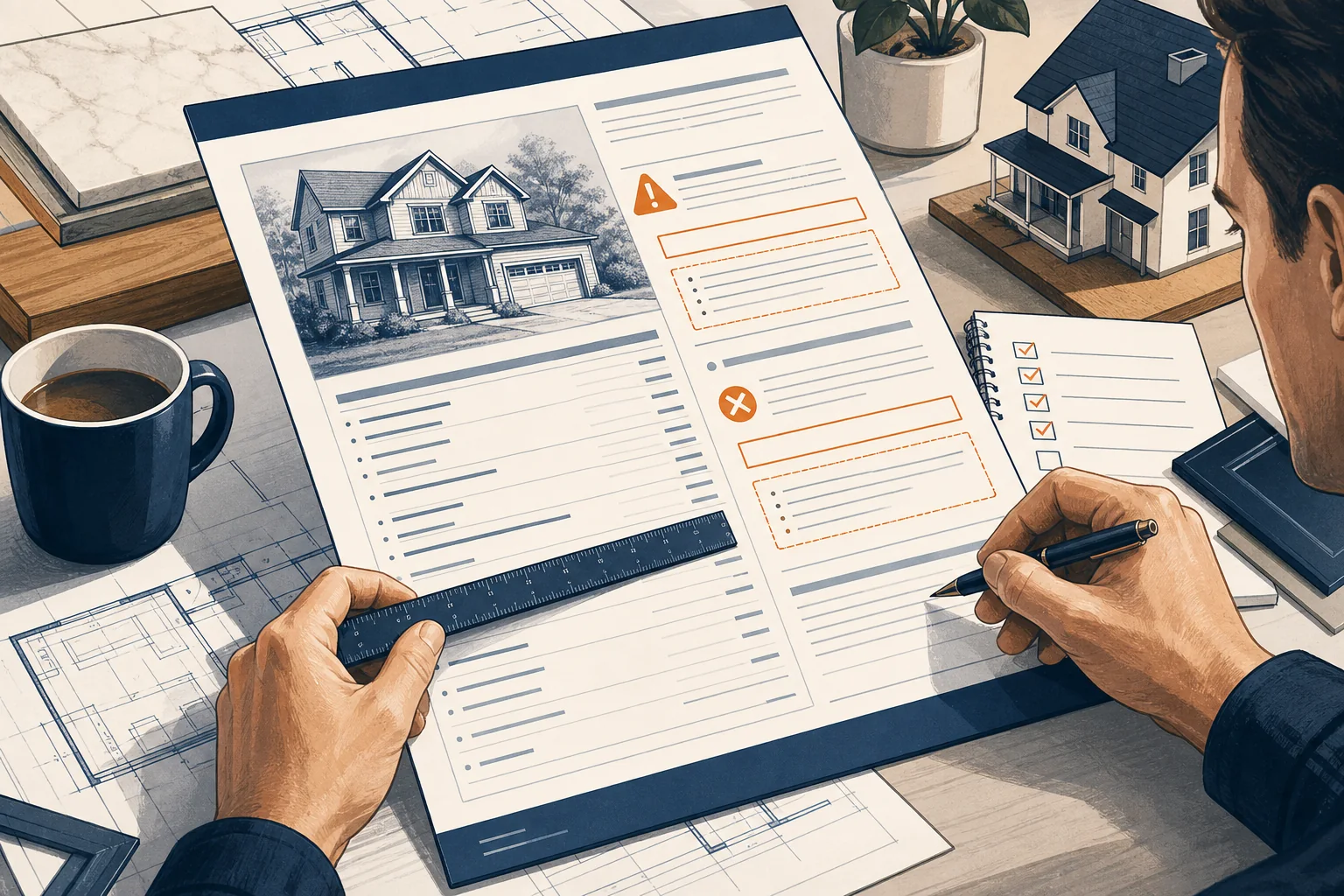
Even the most detailed proposal will have underlying assumptions and explicit exclusions. These are critical to understand, as they can significantly impact the final cost and scope of your project. Overlooking them is a common source of budget overruns and dissatisfaction.
Unstated Conditions
Contractors often make assumptions based on what they observe or what is typical for a project. These might not always align with your home's unique conditions or your specific desires. Examples include:
- Existing Conditions: Assumptions about the structural integrity of walls, the condition of existing plumbing or electrical systems behind finishes, or the presence of hazardous materials (e.g., asbestos, lead paint). If these assumptions prove false, additional costs and delays will likely arise.
- Access: Assumptions about easy access to the work area, availability of parking, or space for material delivery and debris removal.
- Utilities: Assumptions about the availability and condition of water, electricity, or gas lines.
- Work Hours: Assumptions about standard work hours and days, which might conflict with your preferences or neighborhood regulations.
If a proposal doesn't explicitly state what conditions it assumes, ask for clarification. For instance, "Does this price include unforeseen structural repairs if we open the wall?"
Items Not Included
Just as important as what's included is what's explicitly excluded. Contractors will often list items they are *not* providing. This is not necessarily a red flag, but it requires your attention to ensure you've accounted for everything. Common exclusions might be:
- Specific Fixtures or Appliances: You might be responsible for purchasing and supplying items like light fixtures, faucets, appliances, or even specific tile.
- Painting: Sometimes only new drywall is primed, and finish painting is excluded.
- Cleanup Beyond Debris Removal: While debris removal is standard, deep cleaning or professional post-construction cleaning might be excluded.
- Landscaping Restoration: If the project impacts your yard, restoration of landscaping might be your responsibility.
- Temporary Accommodations: Costs for you to stay elsewhere during disruptive phases.
- Design Services: Unless explicitly stated, architectural or interior design services are usually separate.
Carefully review the exclusions list. If an item you expect to be part of the project is listed as excluded, you need to either budget for it separately or negotiate its inclusion with the contractor.
Allowances and Contingencies
- Allowances: An allowance is a specific amount of money set aside in the proposal for items whose exact cost isn't known at the time of the bid (e.g., specific tile, light fixtures, or hardware). For example, a proposal might include a "$500 allowance for bathroom light fixtures." If you choose fixtures costing $700, you'll pay the extra $200. If you choose fixtures costing $300, you'll save $200. Always understand what items are covered by allowances and whether the allowance amount is realistic for your desired quality.
- Contingencies: A contingency fund is an amount included in the budget (or advised to be set aside by the homeowner) to cover unforeseen circumstances or unexpected issues that arise during the project. While a contractor might include a contingency line item in their proposal (e.g., "10% contingency for unforeseen conditions"), it's more common for homeowners to be advised to set aside 10-20% of the project cost for this purpose. This is especially important for older homes or projects involving opening up walls where hidden problems are likely.
Understanding these elements helps you build a more accurate overall project budget. For help with budgeting, consider using a renovation budget calculator.
Turn Open Questions into Written Clarifications
Once you've reviewed a contractor's document, it's highly likely you'll have questions. This is a normal and healthy part of the process. The critical step is to get all clarifications, agreements, and modifications in writing before signing any contract. Verbal agreements, no matter how clear they seem at the time, are difficult to enforce and can lead to disputes.
The Importance of Documentation
Written documentation creates a clear record of what was agreed upon. It protects both you and the contractor by minimizing misunderstandings and providing a reference point if disagreements arise. This is especially important for complex projects where many details are involved.
The FTC emphasizes the importance of getting everything in writing, including the total price, payment schedule, and a detailed description of the work to be done. This helps prevent scams and ensures you have a clear understanding of the agreement.
How to Ask for Clarifications
Approach your questions systematically:
- Review Thoroughly: Read the entire document multiple times, highlighting anything unclear, vague, or missing.
- Compile a List: Create a written list of all your questions and points needing clarification. Group similar questions together.
- Be Specific: Instead of saying "This isn't clear," ask "Does the 'new flooring installation' include removal of the old flooring and subfloor preparation, or is that an additional cost?"
- Request Amendments: If you want something added or removed from the scope, clearly state that you are requesting an amendment to the proposal.
Getting It in Writing
Once you've discussed your questions with the contractor, ensure their responses and any agreed-upon changes are formally incorporated into the document. This can be done in several ways:
- Revised Proposal: The contractor issues a completely new, updated proposal that reflects all changes. This is often the cleanest method.
- Addendum: A separate document, signed by both parties, that specifically lists the changes, additions, or clarifications to the original proposal. The addendum should reference the original proposal and state that it supersedes any conflicting clauses.
- Handwritten Notes (with initials): For minor clarifications, handwritten notes directly on the proposal, initialed and dated by both you and the contractor, can suffice. However, for significant changes, a revised document or addendum is preferable.
Never sign a document that you don't fully understand or that doesn't accurately reflect your agreements. Take your time, ask questions, and ensure every detail is clear and documented.
A Framework for Comparison and Control
Once you have multiple detailed proposals in hand, the real work of comparison begins. It's rarely about simply picking the lowest price. A robust framework helps you evaluate offers holistically, considering value, risk, and clarity alongside cost.
The Renovation Standard Document Review Checklist
Use this master checklist to systematically review each contractor's document. Tick off each item as you confirm its presence and clarity.
General Information
- [ ] Contractor's full business name, address, contact info, license number.
- [ ] Clear statement of document type (Estimate, Bid, Proposal).
- [ ] Date of document and validity period.
- [ ] Your name and project address.
Scope of Work
- [ ] Detailed description of all tasks to be performed.
- [ ] Specific materials to be used (brand, model, quality).
- [ ] Dimensions, quantities, and locations for all work.
- [ ] Demolition and debris removal included.
- [ ] Cleanup procedures specified.
Cost and Payment
- [ ] Total project cost.
- [ ] Detailed cost breakdown (labor, materials, subs, permits).
- [ ] Payment schedule tied to milestones.
- [ ] Down payment amount and conditions.
- [ ] Final payment conditions (e.g., upon completion and final inspection).
- [ ] Allowances clearly defined with amounts and what they cover.
- [ ] Contingency plan or recommendation.
Timeline
- [ ] Estimated start date.
- [ ] Key project milestones.
- [ ] Estimated completion date.
- [ ] Acknowledgment of potential delays.
Assumptions and Exclusions
- [ ] All contractor assumptions clearly stated.
- [ ] All items explicitly excluded from the scope/cost.
- [ ] Clarity on who provides specific fixtures/materials.
Legal and Administrative
- [ ] Proof of liability insurance.
- [ ] Proof of workers' compensation insurance.
- [ ] Warranty information (labor and materials).
- [ ] Who obtains permits and schedules inspections.
- [ ] Change order process clearly outlined.
- [ ] Dispute resolution process (if any).
References and Verification
- [ ] Request for references (not in document, but part of vetting).
- [ ] Verification of license and insurance (done by homeowner).
Comparing Apples to Apples: A Scorecard Approach
To truly compare proposals, create a simple scorecard. List each key element down one side and each contractor across the top. Assign a score (e.g., 1-5, or simply "Excellent," "Good," "Fair," "Poor") for how well each contractor addresses that element. This visual comparison helps highlight strengths and weaknesses beyond just the bottom line.
For a structured approach to comparing offers, consider using a Contractor Quote Comparison Scorecard.
Example Scorecard Elements:
| Evaluation Criteria | Contractor A (Score/Notes) | Contractor B (Score/Notes) | Contractor C (Score/Notes) |
|---|---|---|---|
| Clarity of Scope of Work | 4/Detailed, specific | 3/Some vague areas | 5/Excellent detail |
| Cost Breakdown Detail | 3/Basic categories | 4/Good itemization | 5/Very comprehensive |
| Payment Schedule Fairness | 4/Standard milestones | 2/Large upfront payment | 4/Standard milestones |
| Project Timeline Realism | 4/Realistic, clear | 3/Aggressive, few details | 4/Realistic, clear |
| Assumptions/Exclusions Clarity | 4/Clearly listed | 3/Some unstated | 5/Very transparent |
| Insurance/Warranty Info | 5/Provided proof | 4/Stated, but no proof | 5/Provided proof |
| Communication Responsiveness | 4/Good | 2/Slow replies | 5/Excellent |
| Overall Impression/Trust | 4/Confident | 2/Hesitant | 5/Very confident |
| Total Cost | $X | $Y | $Z |
Beyond Price: Value and Trust
The lowest price is not always the best value. A slightly higher price from a contractor who provides a detailed proposal, communicates clearly, has excellent references, and is fully insured often represents a better investment in the long run. Consider:
- Communication: How responsive and clear were they during the proposal phase? This is a strong indicator of how they'll communicate during the project.
- Professionalism: Was the proposal well-organized and easy to understand? Did they arrive on time for meetings?
- References: Did you contact their past clients? What was their feedback on quality, adherence to budget/timeline, and problem-solving?
- Gut Feeling: Do you feel comfortable and confident working with this individual or team? Trust is a significant factor in a successful renovation.
Red Flags and Warning Signs
While most contractors are reputable, it's essential to be aware of warning signs that could indicate a potential scam or a problematic working relationship. Being vigilant can save you significant money, stress, and time.
Pressure Tactics and Urgency
Be wary of contractors who pressure you to sign a contract immediately, offer "today-only" discounts, or claim that materials prices will skyrocket if you don't commit on the spot. Reputable contractors understand that homeowners need time to review proposals and make informed decisions. The FTC warns against contractors who pressure you to make an immediate decision.
Unusually Low Prices
While a competitive price is desirable, a bid that is significantly lower than others should raise a red flag. It could indicate:
- Cutting Corners: Using substandard materials or unqualified labor.
- Missing Scope: The contractor may have omitted critical parts of the project from their bid, which will become costly "extras" later.
- Lack of Insurance/Licensing: Operating without proper credentials to save on overhead.
- Bait and Switch: Intentionally low-balling to get the job, then inflating costs with change orders.
Cash-Only Demands
A contractor who insists on cash payments, especially for the entire project, is a major warning sign. This often indicates an attempt to avoid taxes, operate without proper licensing or insurance, or hide from legal obligations. Always pay by check, credit card, or bank transfer, which provides a verifiable transaction record.
Lack of Documentation or Detail
If a contractor provides only a verbal estimate, a handwritten note on a scrap of paper, or a proposal lacking the detail discussed in this guide, proceed with extreme caution. A professional contractor will provide clear, written documentation for all aspects of the project.
Unsolicited Offers
Be skeptical of contractors who show up at your door unannounced, claiming to have noticed damage to your home (e.g., a loose shingle, a damaged fence) and offering immediate repairs. This is a common tactic used by transient scammers, especially after natural disasters. The FTC advises against hiring door-to-door contractors who claim to have noticed damage.
Poor Communication
If a contractor is difficult to reach, doesn't return calls, or provides vague answers during the proposal phase, this behavior is likely to worsen once the project begins. Good communication is vital for a successful renovation.
No License or Insurance Verification
A reputable contractor will readily provide proof of their license and insurance. If they hesitate, claim it's not necessary, or provide documents that appear suspicious, do not proceed. Always verify these credentials with your local licensing board and insurance provider.
Large Upfront Payments
While a reasonable down payment (often 10-30% for materials or to secure the contractor's schedule) is standard, be wary of demands for 50% or more upfront, especially for a project that hasn't even begun. This is a common tactic for scammers who take your money and disappear. Ensure progress payments are tied to completed work milestones, not just dates.
Worked Example: Clarifying a Bathroom Remodel Scope
Let's illustrate how to turn vague statements into clear, actionable items within a contractor's document. Imagine you're getting proposals for a bathroom remodel.
Initial Vague Description (from a contractor's preliminary estimate):
"Remodel master bathroom. Includes new tile, vanity, toilet, and shower. Paint walls. Approx. $15,000."
Questions for Clarification (your internal thought process and questions to the contractor):
- "Remodel master bathroom": What does "remodel" entail? Does it include demolition? Disposal? Any structural changes?
- "New tile": What kind of tile? Floor only? Shower walls? What size, material, pattern? Who buys it? Is waterproofing included?
- "Vanity, toilet, and shower": Are these supplied by the contractor or me? What quality/brand? Does "shower" mean just a new head, or a full enclosure, pan, and tile? Is the existing plumbing being moved?
- "Paint walls": How many coats? What brand/quality of paint? Who supplies the paint? Is ceiling included? Trim?
- "Approx. $15,000": What does this cover? Labor only? Materials? Permits? What are the exclusions?
Revised Scope Elements (what you'd expect to see in a detailed proposal after clarification):
Based on your questions and the contractor's responses, the proposal should be updated to reflect specifics:
- Demolition: Remove existing vanity, toilet, shower enclosure, floor tile, and wall tile (up to 48" high). Dispose of all debris off-site. Protect adjacent areas with drop cloths.
- Plumbing: Install new PEX supply lines and PVC drain lines for relocated toilet (moved 12" to the left) and new vanity (moved 6" to the right). Install new shower valve and head in existing location. Pressure test all new plumbing.
- Electrical: Install one new GFCI outlet near vanity. Install two new recessed LED lights in ceiling, connected to existing switch. Install new exhaust fan (supplied by homeowner, allowance $150).
- Flooring: Install Schluter Ditra heat membrane (supplied by contractor) and 12"x24" porcelain floor tile (supplied by homeowner, allowance $800). Grout with epoxy grout.
- Shower: Construct new shower pan with pre-sloped mortar bed and liquid waterproofing membrane. Install 4"x12" ceramic subway tile on shower walls up to ceiling (supplied by homeowner, allowance $1,200). Install new frameless glass shower enclosure (supplied and installed by subcontractor, cost included).
- Vanity & Fixtures: Install homeowner-supplied 48" vanity with quartz countertop and undermount sink. Install homeowner-supplied faucet. Install homeowner-supplied toilet.
- Walls & Ceiling: Repair drywall as needed after demolition. Apply two coats of Sherwin-Williams Duration Home paint (color TBD by homeowner) to walls and ceiling. Paint trim with one coat of semi-gloss white.
- Permits: Contractor will obtain all necessary plumbing and electrical permits. Cost of permits ($XXX) included in total.
- Exclusions: Does not include removal of existing wallpaper, any unforeseen structural repairs behind walls (to be quoted via change order if discovered), or professional post-construction cleaning.
- Allowance: $150 for exhaust fan, $800 for floor tile, $1,200 for shower wall tile. Any costs exceeding these allowances will be added via change order.
This level of detail transforms a vague estimate into a clear, actionable proposal, reducing ambiguity and protecting both parties.
Beyond the Document: Project Control and Closeout
Receiving and understanding a detailed proposal is a significant achievement, but it's just the beginning. Effective project control and a proper closeout are essential for a successful renovation.
Managing Change Orders
Even with the most detailed proposal, changes can occur. You might decide to upgrade a fixture, or the contractor might discover an unforeseen issue (e.g., rotten wood behind a wall). A formal change order process is crucial:
- Written Agreement: All changes to the scope, cost, or timeline must be documented in a written change order, signed by both you and the contractor, before any new work begins.
- Detailed Description: Each change order should clearly describe the new work, its impact on the project cost (addition or subtraction), and any effect on the project schedule.
- Cost Transparency: Ensure the cost for the change order is broken down similarly to the original proposal, so you understand the new charges.
For more guidance, refer to our Renovation Change Order Checklist.
Maintaining Project Records
Throughout the project, keep an organized file of all relevant documents:
- Original signed proposal/contract.
- All change orders.
- Invoices and payment receipts.
- Communication logs (emails, dated notes from phone calls/meetings).
- Photos of the project before, during, and after.
- Product specifications, warranties, and manuals for installed items.
- Copies of permits and inspection reports.
This comprehensive record will be invaluable for future reference, warranty claims, or if any disputes arise.
The Closeout Process
The project isn't truly finished until it's properly closed out. This typically involves:
- Final Walk-Through: Conduct a thorough inspection with the contractor to identify any outstanding items or deficiencies (a "punch list").
- Punch List Completion: Ensure all items on the punch list are addressed to your satisfaction.
- Final Payment: Release the final payment only after all work is completed, inspected, and you are fully satisfied. Withholding a small percentage until final completion is a common practice.
- Lien Waivers: Request lien waivers from the contractor and all major subcontractors and suppliers. This protects you from future claims against your property if they are not paid by the general contractor.
- Warranty Information: Collect all product warranties and the contractor's labor warranty.
- Permit Sign-Offs: Confirm all necessary final inspections have been passed and permits are officially closed.
A detailed guide can be found in our Home Renovation Closeout Checklist.
Frequently Asked Questions (FAQs)
What if a contractor refuses to provide a detailed breakdown?
This is a significant red flag. For any substantial project, a detailed breakdown is essential for transparency and comparison. If a contractor insists on a lump sum without explanation, it's advisable to look for another contractor who is willing to provide the necessary detail. Without it, you cannot accurately compare offers or understand what you are paying for.
Can I negotiate the terms of a proposal?
Absolutely. A proposal is an offer, and most aspects are negotiable. You can discuss the scope of work, material choices (which impact cost), payment schedule, timeline, and even the total price. Be prepared to justify your requests and understand that changes might affect the overall cost or schedule. Always get any negotiated changes in writing as a revised proposal or addendum.
How do I verify a contractor's license and insurance?
You can typically verify a contractor's license through your state's contractor licensing board or your local city/county building department website. Many jurisdictions have online databases. For insurance, ask the contractor for a Certificate of Insurance (COI) directly from their insurance provider, naming you as an additional insured for the project. Then, call the insurance company directly to confirm its validity and coverage.
What's a reasonable down payment?
A reasonable down payment typically ranges from 10% to 30% of the total project cost. This covers initial material purchases and secures the contractor's schedule. Be extremely cautious if a contractor demands 50% or more upfront, especially before any work has begun or materials have been delivered. Some states also have legal limits on the maximum down payment a contractor can request.
Should I always choose the lowest bid?
No. Choosing the lowest bid without thorough evaluation can be a costly mistake. The lowest bid might indicate a contractor cutting corners, missing scope items, or lacking proper insurance/licensing. Prioritize value, clarity, communication, and trust over just price. A slightly higher bid from a reputable contractor with a detailed proposal and strong references often leads to a smoother project and a better outcome in the long run.
What if the project goes over budget?
If the project goes over budget, it's usually due to unforeseen conditions, homeowner-requested changes (change orders), or poor planning/estimating by the contractor. If it's due to unforeseen conditions, a well-written proposal will have a change order process. If it's due to your requests, you'll approve the change order. If it's due to contractor error, you'll need to negotiate. This is why a contingency fund (10-20% of the project cost) is always recommended for homeowners to set aside, especially for older homes or complex renovations.
This guide organizes a project conversation. It is not engineering, legal, code or trade advice. Property conditions and local requirements must be verified by qualified professionals.