Comparing kitchen cabinet quotes can feel like deciphering a foreign language. Each contractor or supplier presents information differently, making it challenging to ensure you’re getting an apples-to-apples comparison. This guide will walk you through a systematic, line-by-line approach to comparing cabinet quotes, empowering you to make informed decisions for your kitchen renovation.
To use this guide effectively, start by gathering at least three detailed quotes based on a consistent design plan. Then, follow the steps outlined below, using the provided checklists and frameworks to break down each quote into its fundamental components. This method will help you identify discrepancies, understand what you're truly paying for, and avoid costly surprises down the line.
The Foundation: Why Line-by-Line Comparison Matters
A kitchen cabinet renovation is a significant investment, often representing a substantial portion of your overall kitchen remodel budget. Simply looking at the bottom line of multiple quotes can be misleading. A lower price might hide omitted services or inferior materials, while a higher price might include premium features you don't need or expect. A line-by-line comparison is your best defense against unexpected costs, scope creep, and dissatisfaction with the final product.
Beyond the Bottom Line
The total cost of a cabinet project encompasses much more than just the cabinets themselves. It includes design services, material specifications, hardware, finishes, delivery, installation, and sometimes even demolition or site preparation. Without a detailed breakdown, it's impossible to discern if one quote is genuinely more competitive or if it simply omits critical elements present in another.
For instance, one quote might include soft-close drawer glides as standard, while another lists them as an upgrade. One might factor in the cost of removing old cabinets, while another assumes you'll handle it. These differences, when aggregated, can significantly alter the true value proposition of each offer.
Preventing Scope Creep and Surprises
A thorough comparison helps establish a clear scope of work upfront. When you understand every item listed (or not listed) in a quote, you can ask targeted questions and ensure all contractors are bidding on the same project. This proactive approach minimizes the chances of unforeseen change orders once the project begins, which can inflate costs and delay completion. It also helps protect you from potential home improvement scams by ensuring transparency and accountability from your chosen provider, as advised by the Federal Trade Commission (FTC).
Remember, local permits, licensing, contracts, technical requirements, and property conditions must always be verified with your local authorities and professionals. This guide focuses on the comparison process, not these specific local requirements.
Step One: Freeze the Cabinet Layout Baseline
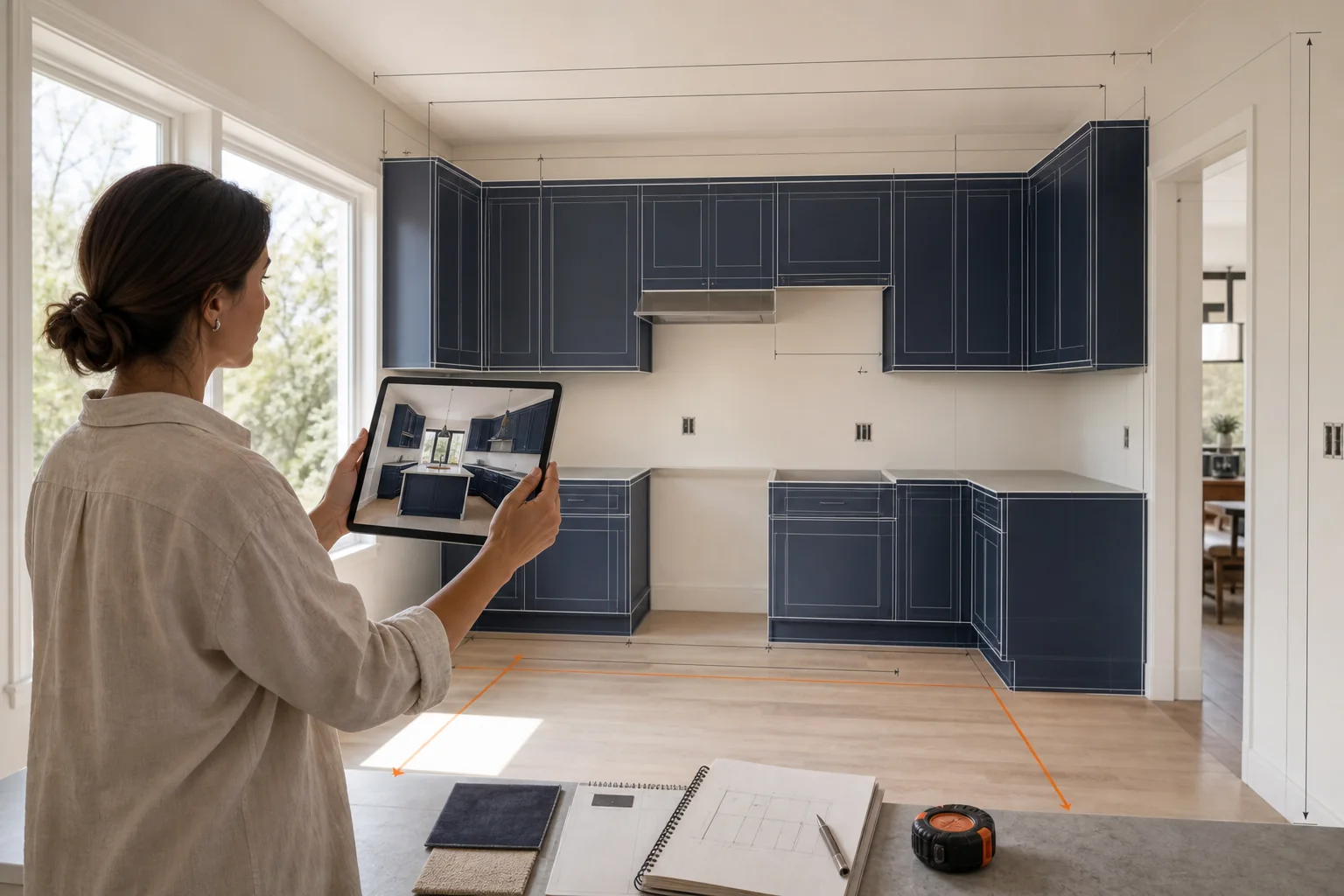
Before you can compare quotes, you must ensure that every quote is based on the exact same kitchen design and cabinet configuration. This is the single most critical step for an accurate comparison. Without a fixed baseline, you're comparing apples to oranges, or worse, apples to watermelons.
The Importance of a Detailed Design
Work with a professional kitchen designer or a cabinet supplier's in-house designer to create a finalized layout. This design should specify not just the overall dimensions but the exact placement and type of every cabinet, appliance, and accessory. This detailed plan becomes the "Request for Quote" (RFQ) document that you provide to every potential supplier or contractor.
Avoid asking different companies to design your kitchen from scratch for quoting purposes. While initial design consultations are common, you need to select one design to use across all bids. This ensures consistency and allows you to compare material and labor costs, not design philosophies.
Essential Layout Elements
Your baseline layout document should include, at a minimum:
- Floor Plan: A top-down view showing the footprint of the kitchen, wall dimensions, window and door openings, and utility locations (plumbing, electrical outlets, gas lines).
- Elevations: Front-facing views of each wall, detailing the height, width, and depth of every cabinet, appliance, and architectural feature.
- Cabinet Schedule/List: A comprehensive list of every single cabinet unit, specifying its type (e.g., base, wall, pantry), dimensions (width x height x depth), and any internal features (e.g., roll-out shelves, spice racks, trash pull-outs).
- Appliance Specifications: Exact make and model numbers for all appliances, especially built-ins like refrigerators, dishwashers, ovens, and cooktops, as these dictate cabinet dimensions and cut-outs.
- Material Preferences: Initial thoughts on door style, wood species, finish, and hardware style. While these can be refined, having a starting point helps guide the quotes.
- Notes and Special Instructions: Any unique requirements, such as custom depths, specific clearances, or integration needs.
Providing this level of detail upfront significantly reduces ambiguity and forces contractors to bid on the same scope of work. It also helps you manage your renovation budget more effectively by clearly defining the project's scope.
Step Two: Standardize Your Request for Quote (RFQ)
Once your baseline layout is established, the next step is to create a standardized Request for Quote (RFQ) document. This document, which includes your detailed layout, ensures that every vendor receives the same information and is asked to quote on the same specific items and services. This standardization is crucial for a true line-by-line comparison.
What to Include in Your RFQ
Beyond the detailed layout from Step One, your RFQ should clearly communicate your expectations for the quote itself:
- Project Overview: A brief description of the project (e.g., "Kitchen Cabinet Replacement for [Your Address]").
- Desired Start and Completion Dates: Provide a general timeline to help contractors assess their availability.
- Quote Format Requirements: Request a line-item breakdown for all materials and labor. Specify that you want separate costs for each cabinet unit, hardware, accessories, delivery, and installation. Ask for a clear distinction between materials and labor.
- Material Specifications: Be explicit about your preferred cabinet construction, door styles, wood species, and finishes. If you are open to alternatives, ask for them to be quoted separately.
- Hardware Specifications: Detail desired hinge types (e.g., soft-close, concealed), drawer glides (e.g., full-extension, soft-close), and any specific pull or knob styles.
- Accessory Specifications: List any internal organizers, pull-out shelves, trash can pull-outs, spice racks, or other accessories you want included.
- Scope of Services: Clearly define what you expect the contractor to include:
- Demolition of existing cabinets (if applicable).
- Delivery of new cabinets.
- Installation of new cabinets.
- Any necessary trim, molding, or filler pieces.
- Cleanup and debris removal.
- Payment Schedule: Inquire about their standard payment terms and schedule.
- Warranty Information: Request details on product and labor warranties.
- Insurance and Licensing: Ask for proof of liability insurance and relevant contractor licenses. Remember, these must be verified locally.
By providing this comprehensive RFQ, you set the stage for receiving quotes that are structured similarly, making your comparison process much more manageable.
Specifying Cabinetry Details
The more specific you are about the cabinetry, the better. Consider these details:
- Construction Type: Face-frame or frameless (European style)?
- Box Material: Plywood, furniture board (particleboard), or MDF? Specify thickness (e.g., 1/2" or 3/4" plywood).
- Drawer Box Construction: Dovetail, dado, or stapled? Solid wood, plywood, or MDF?
- Door and Drawer Front Material: Solid wood, MDF, thermofoil, laminate, or veneer?
- Finish: Paint, stain, glaze? Specify sheen (e.g., matte, satin, semi-gloss).
- Interior Finish: Melamine, clear coat, or unfinished?
Even if you're unsure about all these specifics, stating your preferences or asking for quotes on a "good, better, best" basis (e.g., "quote with plywood boxes" and "quote with furniture board boxes") can be very insightful. This level of detail helps ensure the quotes reflect comparable quality and durability.
Step Three: Compare One Cabinet Schedule
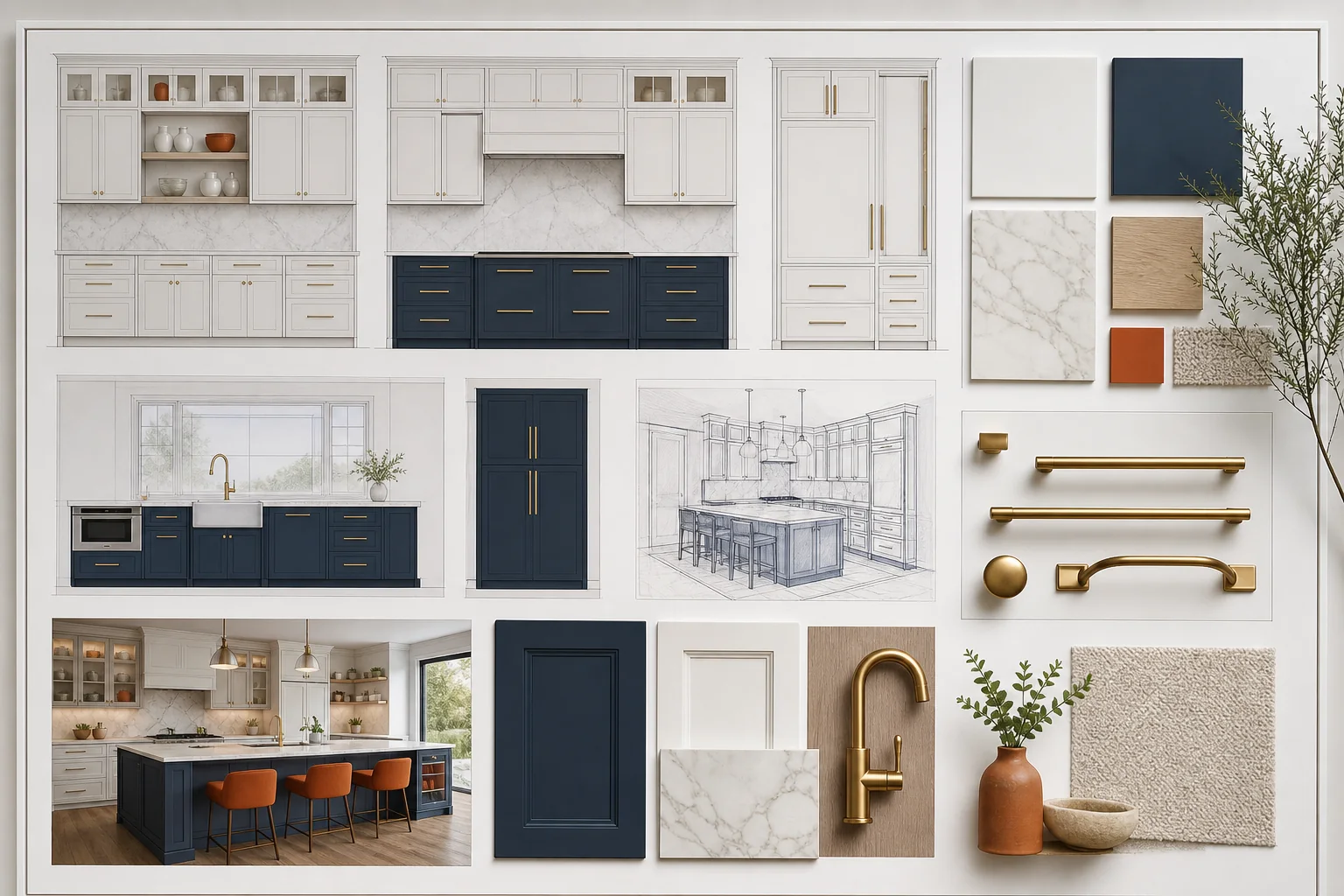
This is where the true line-by-line comparison begins. Take your standardized cabinet schedule from your baseline design and use it as a checklist against each quote. Do not simply look at the total number of cabinets; scrutinize each individual unit.
Matching Cabinet by Cabinet
Create a comparison spreadsheet or use a contractor quote comparison scorecard. List every cabinet from your design in one column. Then, for each quote, fill in the corresponding details and costs. This will immediately highlight discrepancies.
| Your Design Item | Quote A Description | Quote A Unit Price | Quote B Description | Quote B Unit Price | Quote C Description | Quote C Unit Price |
|---|---|---|---|---|---|---|
| B36 (36" Base Cabinet, 2 doors) | 36" Base Cabinet, 2 doors, 1 shelf | $XXX | 36" Base Cabinet, 2 doors, 1 shelf | $YYY | 36" Base Cabinet, 2 doors, 1 shelf | $ZZZ |
| W3015 (30" Wall Cabinet, 15" H) | 30" Wall Cabinet, 15" H, 1 door | $XXX | 30" Wall Cabinet, 15" H, 1 door | $YYY | 30" Wall Cabinet, 15" H, 1 door | $ZZZ |
| DB18 (18" Drawer Base, 3 drawers) | 18" Drawer Base, 3 drawers | $XXX | 18" Drawer Base, 3 drawers, soft-close | $YYY | 18" Drawer Base, 3 drawers | $ZZZ |
| Pantry 2484 (24" Pantry, 84" H) | 24" Pantry, 84" H, 4 shelves | $XXX | 24" Pantry, 84" H, 3 shelves | $YYY | 24" Pantry, 84" H, 4 shelves | $ZZZ |
| Roll-out Shelf (for B36) | (Included in B36) | - | Roll-out shelf for B36 | $YYY | Roll-out shelf for B36 | $ZZZ |
Notice in the example above how Quote B explicitly mentions "soft-close" for the drawer base, and lists a roll-out shelf separately, while Quote A might have it included or omitted. These are the details you need to clarify.
Understanding Cabinet Construction
Beyond the dimensions, delve into the construction details for each cabinet type. This is where quality and durability differences often lie. Ensure each quote specifies:
- Box Material: Is it 1/2-inch plywood, 3/4-inch furniture board, or something else? Plywood generally offers greater strength and moisture resistance than particleboard, but also costs more.
- Joinery: How are the cabinet boxes assembled? Staples, screws, dado joints, or cam locks?
- Back Panel: Is it a thin hardboard stapled on, or a thicker plywood/MDF screwed into place? A full, solid back panel adds rigidity.
- Shelving: Material (plywood, MDF), thickness, and adjustability.
- Drawer Box Construction:
- Material: Solid wood (e.g., birch, maple), plywood, or particleboard?
- Joinery: Dovetail joints are generally considered the strongest and most durable, followed by dado joints. Stapled or glued butt joints are less robust.
- Bottom Panel: Is it recessed and captured in grooves, or simply stapled to the bottom?
- Door and Drawer Fronts:
- Material: Solid wood (species?), engineered wood (MDF), or a combination?
- Construction: Five-piece (stile and rail), slab, or mitered?
- Finish: Type of paint or stain, number of coats, and curing process.
If a quote is vague on these points, ask for clarification in writing. These details directly impact the longevity and performance of your cabinets.
Hardware and Accessories
Hardware can significantly impact both the functionality and the cost of your cabinets. Ensure consistency across quotes:
- Hinges: Are they concealed, self-closing, or soft-closing? What is their brand or quality rating?
- Drawer Glides: Are they side-mount or under-mount? Partial or full extension? Self-closing or soft-closing? What is their weight capacity? High-quality, full-extension, soft-close under-mount glides are a premium feature that adds convenience and durability.
- Pulls/Knobs: Are they included? If so, what style, finish, and quantity? Are there allowances, or are specific items priced?
- Internal Organizers: Confirm if roll-out trays, lazy Susans, trash pull-outs, spice racks, cutlery dividers, or other internal accessories are included and specified by type and quantity.
- Decorative Elements: Crown molding, light rail molding, toe kicks, decorative feet, corbels, and glass inserts for doors should all be itemized.
A quote that bundles "hardware" without specifying these details is a red flag and requires further inquiry. The cost difference between basic and premium hardware can be substantial.
Step Four: Define Delivery, Installation, and Finish
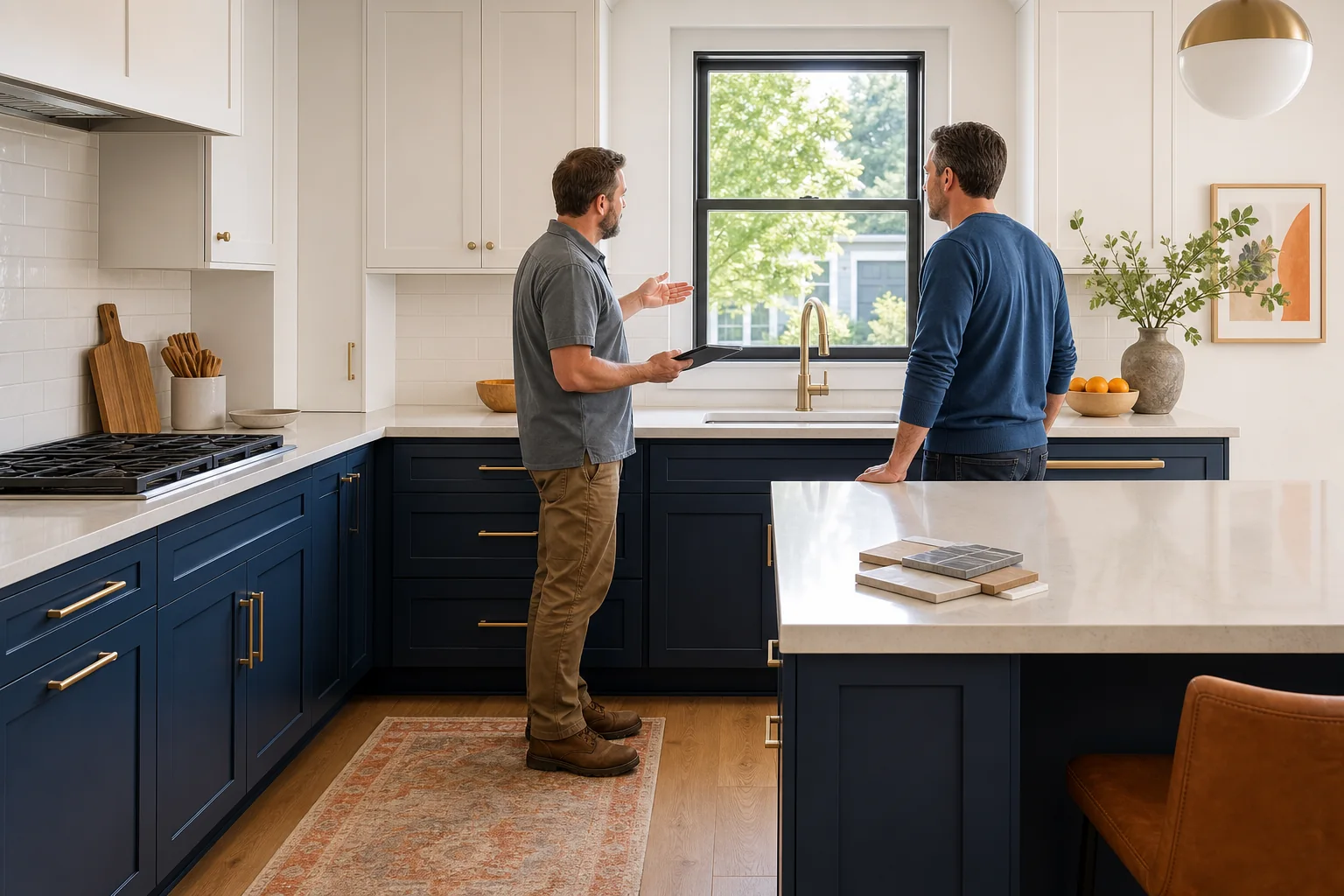
Beyond the physical cabinets, the services associated with getting them to your home and properly installed are critical cost components. These services can vary widely between quotes and are often areas where hidden costs or omissions occur.
Delivery Logistics
Clarify how the cabinets will arrive and who is responsible for what:
- Delivery Fee: Is it included or a separate line item?
- Curbside vs. Inside Delivery: Will the cabinets be left at the curb, or brought into your home? Inside delivery is preferable to protect cabinets from weather and theft.
- Inspection upon Delivery: Who is responsible for inspecting the cabinets for damage or missing parts upon arrival? What is the procedure for reporting issues?
- Storage: If there's a delay between delivery and installation, where will the cabinets be stored, and who is responsible for their safekeeping?
Understanding these details prevents unexpected charges or logistical headaches on delivery day.
Installation Scope
Installation is a significant labor cost. Ensure the scope is clearly defined:
- Demolition: Does the quote include the removal and disposal of existing cabinets and countertops? If so, specify if it includes protecting surrounding areas and cleaning up debris.
- Site Preparation: Does it include any necessary wall preparation (e.g., shimming, minor patching) to ensure a level and plumb installation?
- Cabinet Installation: This should include assembling (if RTA - Ready-to-Assemble), leveling, plumbing, securing, and shimming all cabinet boxes.
- Trim and Molding: Does it include cutting, fitting, and installing all crown molding, light rail, toe kicks, and filler strips?
- Hardware Installation: Does it include installing all hinges, drawer glides, and decorative pulls/knobs?
- Appliance Integration: Does it include cutting openings for sinks, cooktops, and integrating built-in appliances (e.g., dishwasher panels, refrigerator enclosures)? Note that connecting plumbing or electrical is typically not included and requires licensed professionals.
- Cleanup: What level of cleanup is included after installation? Debris removal?
Any services not explicitly listed should be assumed to be excluded. If you need them, ask for them to be added to the quote. For example, if you're concerned about indoor air quality during your remodel, discuss with your contractor how they plan to manage dust and ventilation, aligning with EPA best practices.
Finishing Touches and Site Prep
Some quotes might include additional services that impact the final look and functionality:
- Touch-up Kit: Is a touch-up kit for minor nicks and scratches provided?
- Adjustments: What is the policy for post-installation adjustments (e.g., door alignment)?
- Temporary Kitchen Setup: While rare for cabinet quotes, some full-service remodelers might offer this.
Clarifying these points ensures you have a complete picture of the services provided and helps you plan for any tasks you'll need to handle yourself or hire separately.
Identifying Red Flags in Quotes
As you compare quotes, keep an eye out for warning signs that could indicate potential problems or hidden costs. Recognizing these red flags early can save you significant headaches and money.
Vague Descriptions
Quotes that lack detail are a major red flag. If a line item simply says "Cabinets" or "Installation" without further breakdown, it's impossible to know what you're truly getting. This vagueness leaves room for interpretation and can lead to disputes later on. Insist on specific descriptions for every item, including dimensions, materials, and services.
- Example of a red flag: "Base Cabinets: $X,XXX"
- What to ask for: "B36 (36" Base Cabinet, 2 doors, 1 adjustable shelf, 1/2" plywood box, dovetail drawer boxes, soft-close glides): $XXX"
Missing Details
A quote that omits crucial elements present in other bids or in your RFQ is another warning sign. This could be an oversight, or it could be a deliberate attempt to present a lower initial price, with the intention of adding these items as costly change orders later. Common missing details include:
- Specific hardware (hinges, glides, pulls).
- Trim pieces (crown molding, light rail, toe kicks).
- Internal accessories (roll-outs, trash pull-outs).
- Delivery fees or specific delivery terms.
- Demolition or debris removal.
- Sales tax (ensure it's clearly stated if applicable).
Always compare your RFQ checklist against each quote to ensure nothing is overlooked.
Unusually Low or High Bids
While you're looking for the best value, be wary of quotes that are significantly lower or higher than the others. An unusually low bid might indicate:
- Inferior materials or construction methods.
- Omitted services or items (as mentioned above).
- A contractor who is desperate for work and might cut corners.
- A contractor who doesn't fully understand the scope of work.
Conversely, an unusually high bid could mean:
- The contractor is not interested in the job.
- They are quoting premium materials or services you didn't request.
- They have a significantly higher overhead.
Always ask for clarification on extreme bids. A reputable contractor should be able to explain their pricing. The FTC advises homeowners to be suspicious of contractors who pressure them into making quick decisions or demand full payment upfront.
Pressure Tactics
Be cautious of contractors who employ high-pressure sales tactics, such as "today-only" discounts, immediate decision requirements, or disparaging competitors without specific, verifiable reasons. A professional and trustworthy contractor will give you ample time to review their quote and compare it with others.
Additionally, be wary of contractors who ask for a large upfront deposit (more than 10-30% is often a red flag, depending on local regulations and project size) or demand cash payments. Always ensure payment schedules are tied to project milestones, not just arbitrary dates.
The Master Checklist for Cabinet Quote Comparison
Use this comprehensive checklist to systematically evaluate each quote you receive. Tick off each item as you confirm its presence and clarity in the quote. Add notes for any discrepancies or questions you need to ask.
General Quote Information
- Contractor/Supplier Name and Contact Information
- Quote Date and Expiration Date
- Project Name/Address
- Total Project Cost
- Payment Schedule and Terms
- Estimated Start and Completion Dates
- Warranty Information (Product & Labor)
- Proof of Insurance and Licensing (to be verified locally)
Cabinetry Details (for EACH cabinet unit)
- Cabinet Type: (e.g., Base, Wall, Pantry, Drawer Base)
- Dimensions: Width x Height x Depth
- Quantity:
- Door Style: (e.g., Shaker, Slab, Raised Panel)
- Wood Species/Material: (e.g., Maple, Cherry, MDF, Thermofoil)
- Finish: (e.g., Painted White, Stained Espresso)
- Box Construction:
- Material (e.g., 1/2" Plywood, 3/4" Furniture Board)
- Joinery (e.g., Screwed, Dado, Cam Lock)
- Back Panel (e.g., 1/4" Plywood, 1/8" Hardboard)
- Shelving:
- Material & Thickness
- Adjustable/Fixed
- Drawer Box Construction:
- Material (e.g., Solid Wood, Plywood)
- Joinery (e.g., Dovetail, Dado)
- Bottom Panel (e.g., 1/4" Plywood)
- Hinges:
- Type (e.g., Concealed, Soft-Close)
- Brand/Quality
- Drawer Glides:
- Type (e.g., Under-mount, Full-Extension, Soft-Close)
- Weight Capacity
- Brand/Quality
- Internal Accessories: (e.g., Roll-out Trays, Lazy Susans, Trash Pull-outs, Spice Racks) - specify type and quantity for each.
- Decorative Elements: (e.g., Crown Molding, Light Rail, Toe Kicks, Filler Panels, Decorative Feet) - specify type, material, and linear footage/quantity.
Services Included
- Design Services: (if applicable, separate cost)
- Delivery:
- Fee included/separate
- Curbside vs. Inside Delivery
- Inspection process for damage
- Demolition:
- Removal of existing cabinets
- Disposal of debris
- Installation:
- Assembling cabinets (if RTA)
- Leveling, plumbing, securing cabinets
- Installing trim and molding
- Installing hardware (pulls/knobs)
- Appliance integration (cut-outs, panels)
- Site cleanup
- Permits: (Clarify who is responsible for obtaining, though homeowner is ultimately responsible for local verification)
Exclusions
- Clearly stated items NOT included (e.g., countertops, plumbing, electrical, painting, flooring).
A Modest Worked Example
Let's illustrate the comparison process with a simplified scenario for a homeowner, Sarah, who is renovating her kitchen. She has received three quotes for her identical cabinet layout, which includes a 36-inch base cabinet (B36) and an 18-inch drawer base (DB18).
Scenario Setup
Sarah's RFQ specified:
- B36: 36" wide, 2-door base cabinet, 1 adjustable shelf, 1/2" plywood box, Shaker door style, painted white finish.
- DB18: 18" wide, 3-drawer base cabinet, 1/2" plywood box, dovetail drawer boxes, full-extension soft-close under-mount glides, Shaker door style, painted white finish.
- Installation: Included, with removal of old cabinets.
- Delivery: Included.
Comparing Key Line Items
Here’s how Sarah might compare the relevant sections of her quotes:
Quote A (Supplier Direct)
- B36: 36" Base Cabinet, Shaker White, 1 adjustable shelf. (Note: Box material not specified) - $XXX
- DB18: 18" Drawer Base, Shaker White, 3 drawers. (Note: Drawer box construction, glides not specified) - $YYY
- Installation: Base & Wall Cabinets - $ZZZ
- Demolition: Existing Cabinets - $AAA
- Delivery: Included
- Total for these items: $XXX + $YYY + $ZZZ + $AAA
Sarah's immediate questions for Quote A: What is the box material for B36 and DB18? What type of drawer box construction and glides are included for DB18? Are soft-close hinges included for B36?
Quote B (Local Cabinet Shop)
- B36: 36" Base Cabinet, Shaker White, 1 adjustable shelf, 1/2" Plywood Box, Soft-Close Hinges - $XXX'
- DB18: 18" Drawer Base, Shaker White, 3 drawers, 1/2" Plywood Box, Dovetail Drawer Boxes, Full-Extension Soft-Close Under-Mount Glides - $YYY'
- Installation: Complete Cabinet Installation (includes demo & debris removal) - $ZZZ'
- Delivery: Included
- Total for these items: $XXX' + $YYY' + $ZZZ'
Sarah's immediate questions for Quote B: This quote is very detailed and matches her RFQ well. She might ask for clarification on the specific brand of hinges/glides, but otherwise, it's clear.
Quote C (Big Box Retailer)
- B36: 36" Base Cabinet, White Shaker, 1 shelf, Furniture Board Box - $XXX''
- DB18: 18" Drawer Base, White Shaker, 3 drawers, Furniture Board Box, Standard Glides - $YYY''
- Installation: Standard Cabinet Install - $ZZZ''
- Demolition: Not included.
- Delivery: $AAA'' (separate line item)
- Total for these items: $XXX'' + $YYY'' + $ZZZ'' + $AAA''
Sarah's immediate questions for Quote C: Demolition is not included, which means she'd have to pay separately or do it herself. The box material is furniture board, which is different from her plywood preference. "Standard Glides" for DB18 are vague and likely not soft-close. This quote appears lower initially but has significant differences in scope and material quality.
By comparing line by line, Sarah quickly identifies that Quote A is missing critical details, Quote C uses different materials and excludes demolition, while Quote B is the most comprehensive and aligned with her RFQ, even if its initial price for the individual items might appear slightly higher than the vague or lower-spec alternatives. This systematic approach allows her to ask targeted questions and ensure she's comparing equivalent offerings.
Closeout and Recordkeeping
Once you've meticulously compared quotes and selected your preferred contractor or supplier, the process isn't over. Proper closeout and recordkeeping are essential for a smooth project, protecting your investment, and ensuring you have all necessary documentation for future reference or warranty claims.
Finalizing the Agreement
Before signing any contract, ensure that all the clarifications and agreements made during the quote comparison phase are explicitly written into the final contract. This includes:
- Detailed Scope of Work: The contract should incorporate your finalized cabinet schedule, material specifications, hardware details, and a clear breakdown of all included services (delivery, installation, demolition, cleanup, etc.).
- Payment Schedule: Ensure the payment schedule is clearly defined, tied to specific project milestones, and mutually agreed upon. Avoid large upfront payments.
- Timeline: A realistic project timeline, including start and estimated completion dates, should be part of the contract.
- Warranty Information: Both product warranties (from the cabinet manufacturer) and labor warranties (from the installer) should be detailed.
- Change Order Procedure: The contract should outline the process for handling any changes to the scope of work, including how they will be documented and priced.
- Proof of Insurance and Licensing: Reconfirm that the contractor has current liability insurance and any required licenses. Request copies for your records. Remember, these must be verified locally.
Never sign a contract that contains blank spaces or vague language. If you have any doubts, consult with a legal professional before signing. This is not legal advice, but a recommendation for due diligence.
Documenting the Process
Maintain a comprehensive project file throughout your renovation. This file should include:
- All Quotes: Keep copies of every quote you received, even those you didn't choose.
- Your RFQ and Baseline Design: The original documents you provided to contractors.
- Correspondence: All emails, notes from phone calls, and written communications with contractors, including answers to your clarification questions.
- The Signed Contract: Your final, executed agreement.
- Payment Records: Copies of all invoices, receipts, and proof of payments.
- Warranty Documents: Manufacturer warranties for cabinets and hardware, and the installer's labor warranty.
- Photos: Before, during, and after photos of the renovation.
- Contact Information: For the contractor, cabinet manufacturer, and any key subcontractors.
This organized recordkeeping is invaluable for managing your project, addressing any issues that arise, and for future reference, such as when you complete your home renovation closeout checklist.
By diligently following these steps, you transform the daunting task of comparing cabinet quotes into a manageable, transparent process, ensuring you get the kitchen cabinets you want, at a fair price, and with minimal surprises.
Frequently Asked Questions (FAQs)
1. How many quotes should I get for kitchen cabinets?
It is generally recommended to obtain at least three detailed quotes for your kitchen cabinet project. This allows you to compare different pricing structures, material options, and service inclusions, giving you a better understanding of market value and helping you identify any outliers or red flags. More quotes can provide a broader perspective, but ensure you have a consistent baseline design for all of them.
2. What if quotes use different terminology for the same item?
This is a common challenge. When you encounter different terminology, make a note of it and ask each contractor for clarification. For example, one might say "furniture board" while another says "particleboard." Clarify if these refer to the same material or if there's a difference in quality or composition. Update your comparison spreadsheet with the standardized term once you understand it, and ensure all contractors are quoting on the same specification. Don't assume; always ask.
3. Should I prioritize cost or quality when comparing quotes?
The ideal approach is to prioritize value, which is a balance of cost and quality. While a lower price might be tempting, it can often indicate lower-quality materials, omitted services, or less experienced labor, leading to higher long-term costs or dissatisfaction. Conversely, the highest quote isn't always the best; it might include unnecessary premium features. Focus on getting the best quality you can afford for the specific features and durability you desire, ensuring all quotes are for comparable specifications.
4. What's the difference between "cabinet allowance" and a specific line item?
A "cabinet allowance" is a lump sum amount allocated in a quote for cabinets, without specifying the exact type, quantity, or features. This is a red flag for line-by-line comparison because it doesn't allow for an apples-to-apples evaluation. A specific line item, on the other hand, details each cabinet unit, its dimensions, materials, and internal features. Always insist on specific line items rather than allowances, as allowances often lead to unexpected overages once selections are made.
5. How do I handle quotes that don't include installation?
If some quotes include installation and others don't, you'll need to obtain separate installation quotes for the latter. This allows you to add the estimated installation cost to the material-only quotes, creating a more complete picture for comparison. Ensure your independent installer quotes are based on the same scope of work (e.g., demolition, site prep, trim installation) as the all-inclusive quotes. Remember to verify local licensing and insurance for any independent installers.
6. What if a contractor pressures me to sign quickly?
High-pressure sales tactics are a significant red flag. A reputable contractor understands that a major renovation decision requires careful consideration and comparison. If a contractor pressures you to sign immediately, offers "today-only" discounts, or discourages you from getting other quotes, it's best to walk away. Take your time, review all documentation thoroughly, and ensure you feel comfortable and confident with your chosen professional. The FTC advises caution against such tactics.
This guide organizes a project conversation. It is not engineering, legal, code or trade advice. Property conditions and local requirements must be verified by qualified professionals.